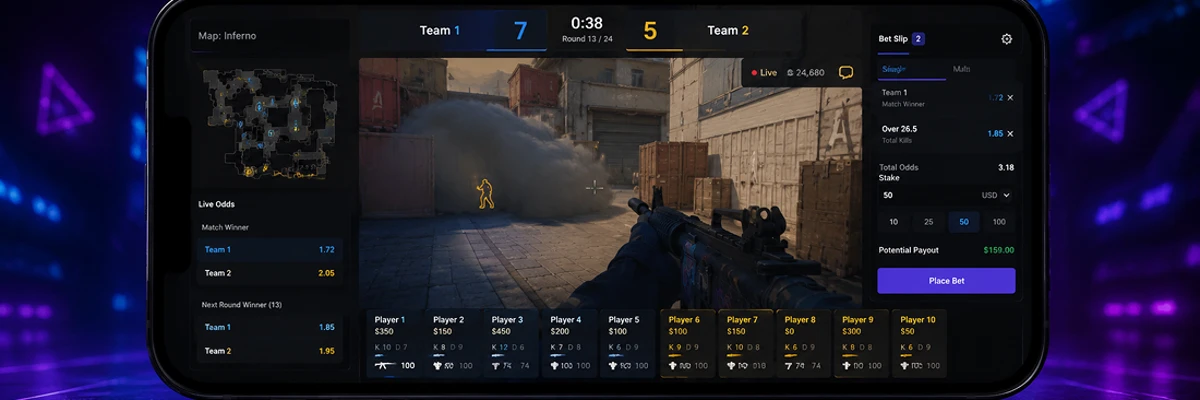
The 2026 FIFA World Cup ended on July 19 with Spain defeating Argentina 1–0 after extra time. Ferran Torres scored the decisive goal, giving Spain its second men’s World Cup title and ending a tournament that was significant not only for football, but also for the global sports betting industry. Spain’s World Cup victory completed a competition that created an unusually long period of concentrated betting activity.
With 48 participating teams and 104 matches, the expanded tournament provided considerably more betting inventory than previous editions. Sportsbooks could offer thousands of pre-match, in-play, player and tournament markets over more than five weeks.
However, more matches did not necessarily mean that every operator achieved proportionally higher revenue. The tournament highlighted the difference between betting turnover, gross gaming revenue and long-term customer value.
A Bigger Tournament Created More Betting Volume
Before the tournament began, H2 Gambling Capital estimated that approximately $60 billion would be wagered through regulated channels during the World Cup. The forecast represented a 71% increase compared with the 2022 tournament.
The projected rise was linked to the expanded match schedule, the growing availability of regulated online sportsbooks and increased access to mobile betting in the United States, Canada and other developing markets. The $60 billion World Cup betting forecast illustrated the commercial expectations surrounding the competition.
Nevertheless, betting activity was not distributed evenly throughout the tournament. Early group-stage matches created a high number of individual betting opportunities, but the largest stakes were generally expected around prominent national teams and knockout fixtures.
Tournament stage | Typical betting behaviour | Main challenge for operators |
|---|---|---|
Group stage | High match volume and smaller average bets | Maintaining interest in less prominent games |
Round of 32 | More accumulator and qualification bets | Pricing unfamiliar matchups |
Round of 16 | Higher stakes on leading teams | Managing concentrated exposure |
Quarter-finals | Stronger in-play activity | Adjusting odds after major events |
Semi-finals | More player and goalscorer markets | Controlling promotional costs |
Final | Maximum traffic and casual participation | Platform stability and liability management |
The final normally attracts the widest betting audience, including casual customers who may not follow club football or place regular sportsbook wagers. That gives operators a major acquisition opportunity, but it can also create technical and financial pressure within a single match window.
Live Betting Became the Central Product
The tournament showed that football betting is no longer centred entirely on predicting a winner before kickoff. In-play markets allowed customers to wager on the next goal, total corners, cards, substitutions, individual players and short periods of match action.
A single customer could therefore place several bets during one game rather than making only one pre-match selection.
The main drivers of live World Cup betting included:
rapidly changing match odds;
mobile access during live broadcasts;
real-time statistics and match trackers;
cash-out functionality;
goalscorer and player-performance markets;
emotional reactions to goals, cards and VAR decisions.
Live betting also depends heavily on accurate and fast data. In January 2026, FIFA selected Stats Perform as its first official worldwide distributor of betting data and betting streaming rights. Under the agreement, RunningBall supplied official betting data, while Opta delivered statistics, scores and player insights to licensed sportsbooks.
The official FIFA betting data agreement gave operators access to direct match information and streaming products designed for real-time betting.
This development demonstrates how sportsbooks increasingly compete through speed and product quality rather than through odds alone. A delayed market suspension or inaccurate event feed can expose an operator to significant losses, particularly during a match attracting millions of bets.
More Markets Did Not Eliminate Bookmaker Risk
The World Cup generated considerable turnover, but betting handle should not be confused with operator profit. Sportsbooks must pay winning customers, absorb promotional costs and manage uneven liabilities across popular teams and outcomes.
A major upset may benefit an operator when most recreational bettors support the favourite. However, a heavily backed favourite winning several matches can produce large payouts, especially when included in accumulators.
Operators also faced the cost of:
free bets and odds boosts;
affiliate commissions;
paid advertising;
payment processing;
official data services;
additional customer support;
increased fraud and verification checks.
Therefore, an operator handling more bets could still record disappointing margins if its promotional expenses were excessive or its risk management was weak.
CasinoAudit reviews gambling platforms by examining broader operational factors rather than relying only on headline bonuses. Independent casino and sportsbook analysis can help users consider payment reliability, licensing, withdrawal conditions and promotional terms alongside the range of available betting markets.
The World Cup Attracted Temporary Customers
Major football tournaments bring people into sportsbooks who may rarely bet during domestic league seasons. Some participate because they support a national team, while others become interested only when a tournament reaches its knockout phase.
This customer group can generate strong short-term registration numbers, but its long-term value is uncertain. A user who opens an account for a free bet on the final may disappear immediately after the tournament.
Operators therefore had to decide whether to compete aggressively for one-time customers or focus on players who could remain active during domestic leagues, European club competitions and other sports.
The more sustainable strategy was to use World Cup offers as an entry point rather than as the entire customer relationship. That meant providing simple navigation, useful match information, reliable payments and transparent terms instead of depending only on oversized bonuses.
Integrity and Safer Gambling Remained Important
The scale of the tournament also increased concerns about suspicious betting, unlicensed operators and harmful gambling behaviour.
The International Betting Integrity Association reported 300 suspicious betting alerts across 16 sports in 2025, an increase of 29% from the previous year. Its monitoring system covers more than 1.5 million sporting events and approximately $300 billion in annual betting turnover.
The IBIA betting integrity monitoring system shows why cooperation between sportsbooks, regulators and sporting organisations is particularly important during international tournaments.
Consumer protection was equally relevant. Live betting can encourage repeated, rapid decisions, particularly after a customer loses an earlier wager. Notifications, instant deposits and constantly changing odds may make it difficult for inexperienced users to step away.
Effective protections should therefore include deposit limits, betting limits, time reminders, self-exclusion tools and clear bonus conditions. These measures help users retain control while distinguishing regulated sportsbooks from offshore platforms with limited accountability.
What the World Cup Means for Sports Betting
The 2026 World Cup did more than create a temporary rise in football wagers. It accelerated existing trends in mobile betting, real-time data, personalised markets and in-play products.
The expanded 104-match format gave sportsbooks more inventory, but it also increased data expenses, promotional competition and operational risk. The tournament demonstrated that high turnover alone is not proof of commercial success.
The most successful operators are likely to be those that converted temporary tournament interest into long-term engagement without relying on unsustainable bonuses. They also needed stable technology, accurate live data, effective risk controls and meaningful safer-gambling protections.
For bettors, the tournament offered more choice than ever before. At the same time, that choice made it more important to compare operators carefully, understand betting conditions and avoid making rapid decisions based only on the emotion of a live match.

Focused on sportsbook and esports, exploring market trends, emerging opportunities, and the growth of digital betting platforms. Looks at how user experience and platform design shape player engagement over time.
More articles in Esports & Sports betting